
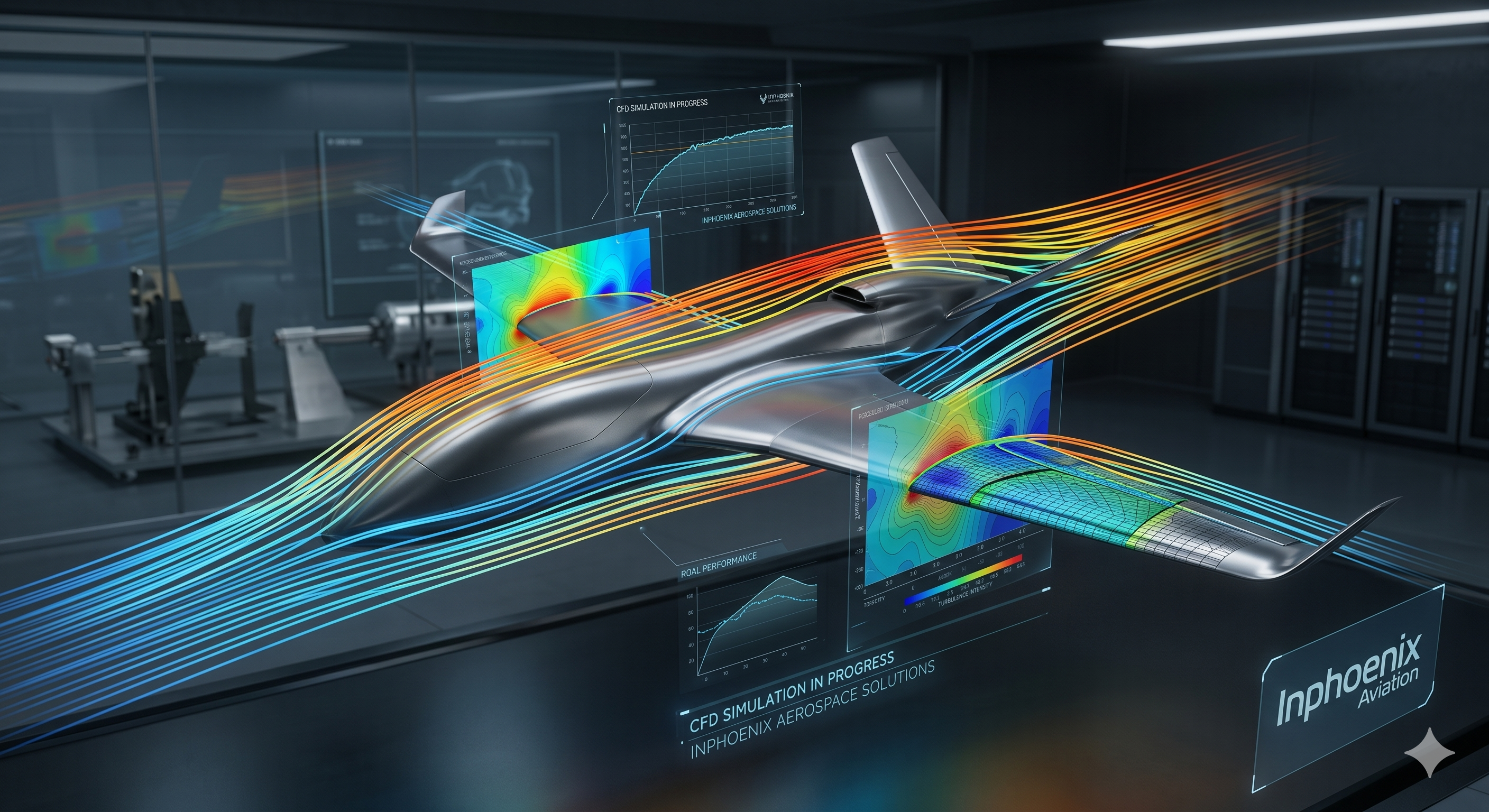
How Digital Engineering is Reshaping UAV Design
The aerospace industry is undergoing a rapid transformation, driven heavily by the demand for more efficient, autonomous, and robust Unmanned Aerial Vehicles (UAVs). Moving a drone from a conceptual sketch to a flight-ready prototype used to be a heavily siloed, time-consuming process. Today, the landscape has completely shifted.
By integrating advanced Computational Fluid Dynamics (CFD) early in the design phase, we can now simulate complex aerodynamic behaviors in highly accurate virtual environments. This allows engineering teams to observe airflow, pressure distribution, and drag coefficients before a single physical part is ever manufactured. Iterations that once took weeks in a wind tunnel can now be accomplished in hours, drastically reducing both R&D costs and time-to-market.
However, running simulations is only half the battle. True innovation happens when we pair these aerodynamic analyses with broader digital engineering practices. By automating engineering workflows and utilizing connected data platforms, we ensure that every structural analysis and performance metric flows seamlessly between departments. This creates a single source of truth for the entire design lifecycle.
At Inphoenix Aviation, we believe that the future of aerospace lies in this intersection of precision simulation and intelligent process automation. By continuing to refine how we design, analyze, and build, we are setting new standards for what UAVs can achieve in the skies.